
Disco Pigs
On being a lost cause.

And so ends the summer of “Barbenheimer,” a film event we will fondly remember for its buzzy hype, fan art, and memes proclaiming “I am become ______, destroyer of ______,” in pink, swooping fonts. As we move towards the end of the year, I can’t help but feel hopeful that Cillian Murphy has the Oscar for Best Actor in the bag for his portrayal of Oppenheimer’s protagonist. Many have already written about how Oppenheimer is the movie that director Christopher Nolan has been working towards his entire career: the story of a man both driven and plagued by his own vision, juggling his ego with big, high stakes ideas, and reckoning with the conflicted legacy that his actions have left behind him. In many ways, Murphy was Nolan’s muse for this film. The Irish actor has been in over half of his filmography, and the bulk of Oppenheimer (specifically, all of the parts shot in color) is explicitly intended to be from his character’s perspective. Despite boasting a large, impressive supporting cast, Murphy is the focus of nearly every frame of the film.
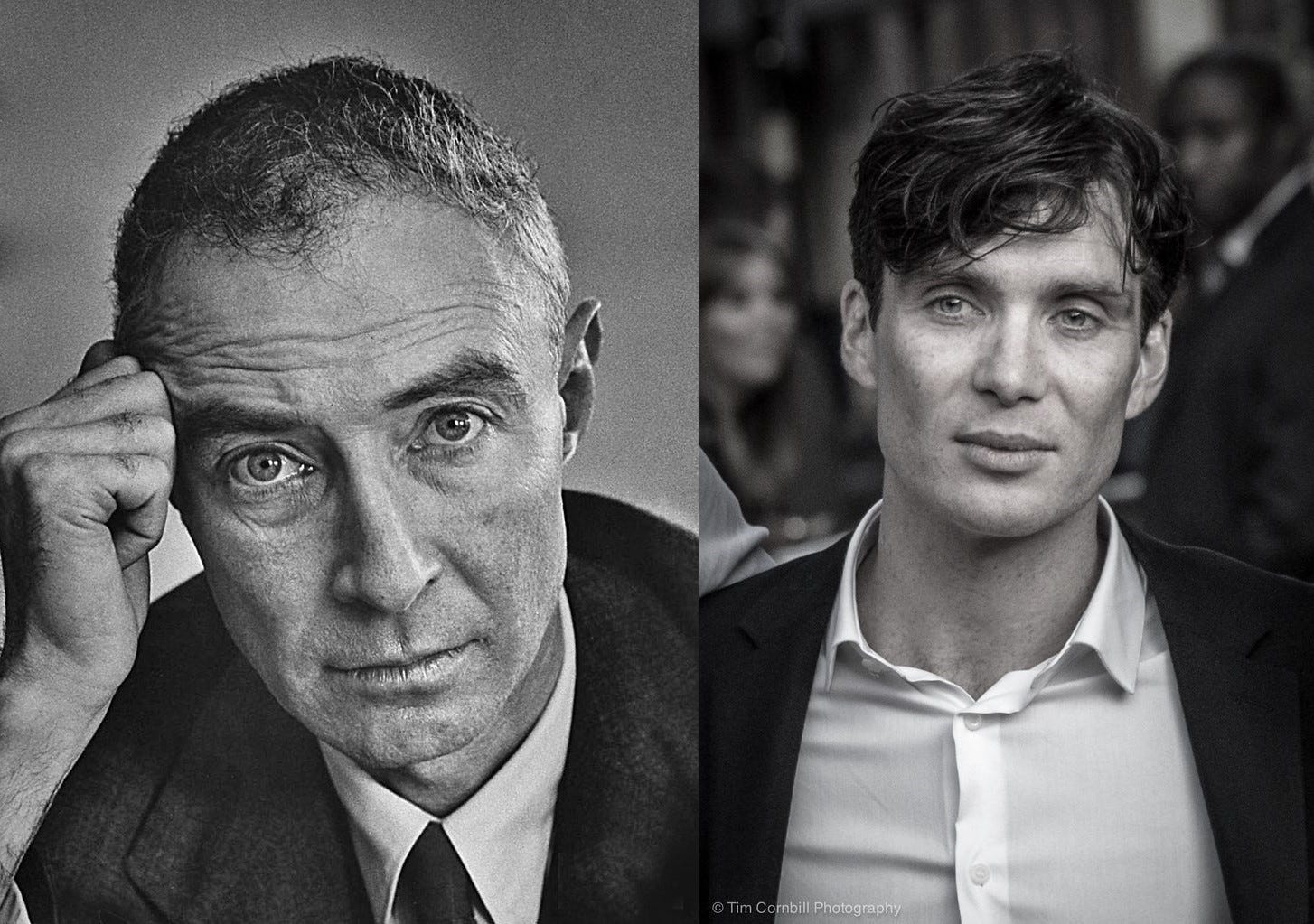
Oppenheimer is the ultimate Nolan movie and the character Oppenheimer is certainly the most significant of Murphy’s roles. I will probably need to re-watch the film if I want to digest it enough to write about it. But I do want to take this opportunity to revisit the film that started Murphy’s career over 20 years ago. While Oppenheimer is the first true blockbuster where he’s had top billing, Murphy has been bringing his quiet severity to intense or villainous roles since 2001. So let’s talk about Disco Pigs, the first of many unnerving yet captivating Murphy performances.
His first leading film role, the 2001 film was adapted from the stage play where Murphy originated the character of “Pig” opposite Eileen Walsh’s “Runt.” Together, the two tell the story of their friendship as they approach their 17th birthdays. With no additional cast in the play, it’s the kind of sparse, intimate story that thrives on a stage. The point is that these two friends have created a world together: one with their own language (the story is told through a specific, affected Cork dialect), their own nicknames (“Pig” and “Runt” are born Darren and Sinead, respectively), and eventually, a toxic connection that ends in violence.
Most of the film is narrated by Runt through voiceover, and she begins with her own birth. This is a story about what we lose when we grow up, and a lot of melancholy can be gleaned from the innocence and potential inherent in flashbacks like these. We hear Runt speak intelligently about her perspective as a baby: about what she wants, about what she’s thinking, and about hearing Pig’s cries for the first time. Pig was one of the very first things she laid eyes on, and they connect when they are mere moments old. “From that moment, we become one, and we need no one else,” she says. “Nobody.”
This opening lends a wholesomeness to the film that will soon dissolve. Disco Pigs is fueled by the fervent, frenzied emotions that accompany how it feels to be on the cusp of adulthood, but still driven by teen angst. Pig and Runt retain an “us against the world” mentality, and while Runt’s voiceover works well as a framing device — she is telling us her personal fairytale, The Story of Pig and Runt, childhood friends that grow up holding hands through a shared bedroom wall — we learn that when love is exclusive, it can become dangerous. As the two teens reach an important transition in their relationship, we begin to see that while this is Runt’s story, it will be about Pig’s demise.
As the two sit at the beach anticipating their birthdays, Runt muses that she would like the ocean to take her away so she can have something different, even for a half hour. Pig’s fantasy is more direct: firing a space laser at earth that would destroy everything except for a palace for him and Runt. Runt is quickly established as the one who wants more than what they have right now. Runt wants to evolve, and Pig only wants Runt.
A few scenes in, we get a more accurate look at their present-day friendship — a friendship that is undercut with violence. Pig assaults a liquor store clerk to get free vodka for the two of them, and they work together to humiliate a fellow classmate at a dance. The two exist under the assumption that a friendship that is violent and alienating is a friendship that is special. But something this ugly and harmful is unsustainable as they grow older and the real world rears its head.
In this case, one aspect of the real world is Pig’s sexual awakening. As his longing for Runt becomes apparent, we see him grow increasingly possessive and violent during the duo’s antics. His gaze lingers on her, and there is a threatening edge to his voice as he yells about the two of them being the king and queen. A frenzied, unreciprocated kiss goes undiscussed between the two of them, but behind the scenes, we get a peak at Pig’s carnal desires during an unsettling monologue. Murphy’s Pig is captivating as he sits, skinny and shirtless in his bedroom, describing a fantasy of his first time with Runt in a breathy, lilting voice. “We man and woman now,” he says to himself. His graphic sentences are broken, and sometimes hard to parse through his heavily accented dialect. “We not babies no more.”
As their misbehavior escalates, the film’s adults interfere in their friendship, which is a curious plot development. It’s stressed time and again that Runt and Pig don’t really have anything besides each other (“You’re my whole world, Runt,” Pig tells her multiple times), and we don’t get a ton of information about their respective parents. It’s possible they are absent. It’s possible they are present but abusive (a flashback shows a young Runt unfairly being punished as her father abuses alcohol). It’s possible they are present, but that ugly interactions with adults have left their children jaded. Information about the grown ups in this film is sparse, which is an interesting choice for a film that takes such a strong “us versus them” standpoint for its characters. In any case, the decision is made very suddenly that Runt will be sent away to a trade school in an effort to separate the two friends. When one of the parents asks “What about Darren?” the response we hear is, “To be honest, we think he’s a lost cause.” We understand, at this point, that the rest of the movie will be about Pig falling apart.
When you are a teenager, suffering a heartbreak can feel like the end of your entire world. Murphy perfectly captures the unhinged downfall of a desperate young man becoming ever more dangerous when deprived of the object of his obsession. In many ways, this film is an exploration of what happens when childhood ends. As Pig cries, paces, and manically yells to himself, we are reminded that very often, young men are not taught how to handle what’s happening inside of them as they come of age. A nice detail in the film adaptation is that we are given a few scenes where present-day Pig is juxtaposed with a small child. Having seen Pig in his flashbacks, we can deeply feel how far away from that innocence he has grown.
For Runt’s part, while her misbehavior follows her to her new school, she does, in fact, get to experience a new version of herself. She proves capable of having relationships outside of Pig, and when he inevitably shows up in her cafeteria for their reunion, she clearly knows that she shouldn’t leave with him. Pig is more manic than ever, and he believes in the fairy tale the two have written for themselves to the point of near delusion. But when Runt squints, she can still see it, too.
Elaine Cassidy plays Runt, and she expertly wears the character’s indecision on her face. Runt is beginning to see what her future could look like, potentially even a future without Pig. The film reaches a violent fever pitch when Pig beats another man to death. Afterwards he says, “I know there has to be a stop, Runt.” They return to the beach where they sat at the beginning of the film, and the two consummate their relationship, after which Pig wordlessly gives Runt permission to smother him to death.
We are now 22 years out from Disco Pigs, and likely, viewers would (correctly) clock this film as problematic today. Pig is painted as doomed, while Runt, the more adaptive of the two, is portrayed as having potential. She can be saved, and Pig’s death is played as both a mercy killing and a loving act of sacrifice for his friend. While teens dying because they are too emotional is a pretty well-established trope in storytelling, it’s also sort of a cop out. You would think that in an “us versus them” narrative, it would be satisfying to have the “us” come out on top. To prove the adults wrong. Instead, Disco Pigs is a tragedy. It’s Murphy’s tragedy as we see him break down, rant to himself, fly into fits of mania, and preach his delusions where he is the King and Runt is the Queen. While he is clearly troubled, Pig doesn’t have any scripted, specific mental illnesses. I think there can be value in leaving a troubled character undiagnosed — not everything has to be explained, and for most of us, a person’s behavior typically stands on its own.
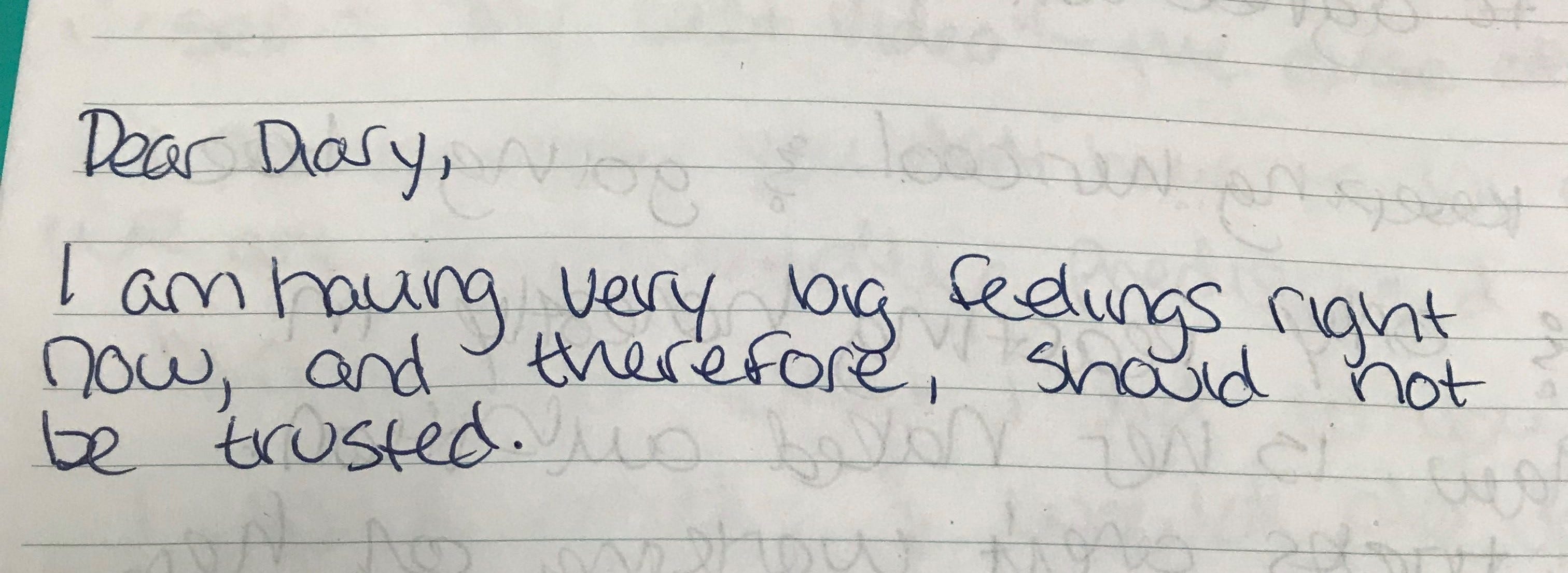
That said, I think we are more reluctant to believe in lost causes today. It’s a lot to ask of present day audiences to just accept that a character is better off dead. Despite our best efforts, we’ve grown some empathy over the past twenty years. I know that I have multiple volumes of journals from when I was a teenager. It’s mostly just pages and pages and pages of lust and anger: the two primary drivers of Pig in this film. Today, we’re more closely attuned to the characters in our art and the larger implications of the actions in our stories. “Pig’s death is the inevitable end of this fairy tale” is a pretty severe implication.
“And so it’s all over then. Pig and Runt, they leave.” That’s how Runt’s voiceover begins to wrap up the film, as we now realize that her narration has been her reflection on their friendship in the wake of Pig’s death. “I really do want for something else. That silence again. And so I know that he too is silent and safe. And Runt, alone.” Pig is better off dead, and Runt begins her life anew. 2001 was a different time.
I assume the stage version was probably a better version of this story. I do love a good intimate exploration of an intricate, if toxic, dynamic, and a play can be such a compelling tool for that. But I’m glad that the world got to see Cillian Murphy’s portrayal of Pig, and I’m grateful that he found his calling as a handsome, intense weirdo who would eventually become one of Hollywood’s most celebrated actors.